ArgoCD MCP Server: AI-Driven GitOps Automation Guide
Introduction: The Future of GitOps Meets AI Intelligence
The ArgoCD MCP Server brings together two powerful technologies. First, it combines GitOps automation with artificial intelligence. Second, it uses the Model Context Protocol (MCP) to make this connection work smoothly.
What Makes ArgoCD MCP Server Important
Modern development teams need smarter tools. As a result, the argocd mcp server changes how we deploy applications. Instead of basic automation, it creates intelligent systems. Furthermore, these systems can learn from past deployments and make better decisions.
Key Benefits for Development Teams
This technology helps teams in several ways. For instance, it enables automated rollback decisions. Additionally, it provides context-aware infrastructure management. Moreover, it adapts to changing application states automatically.
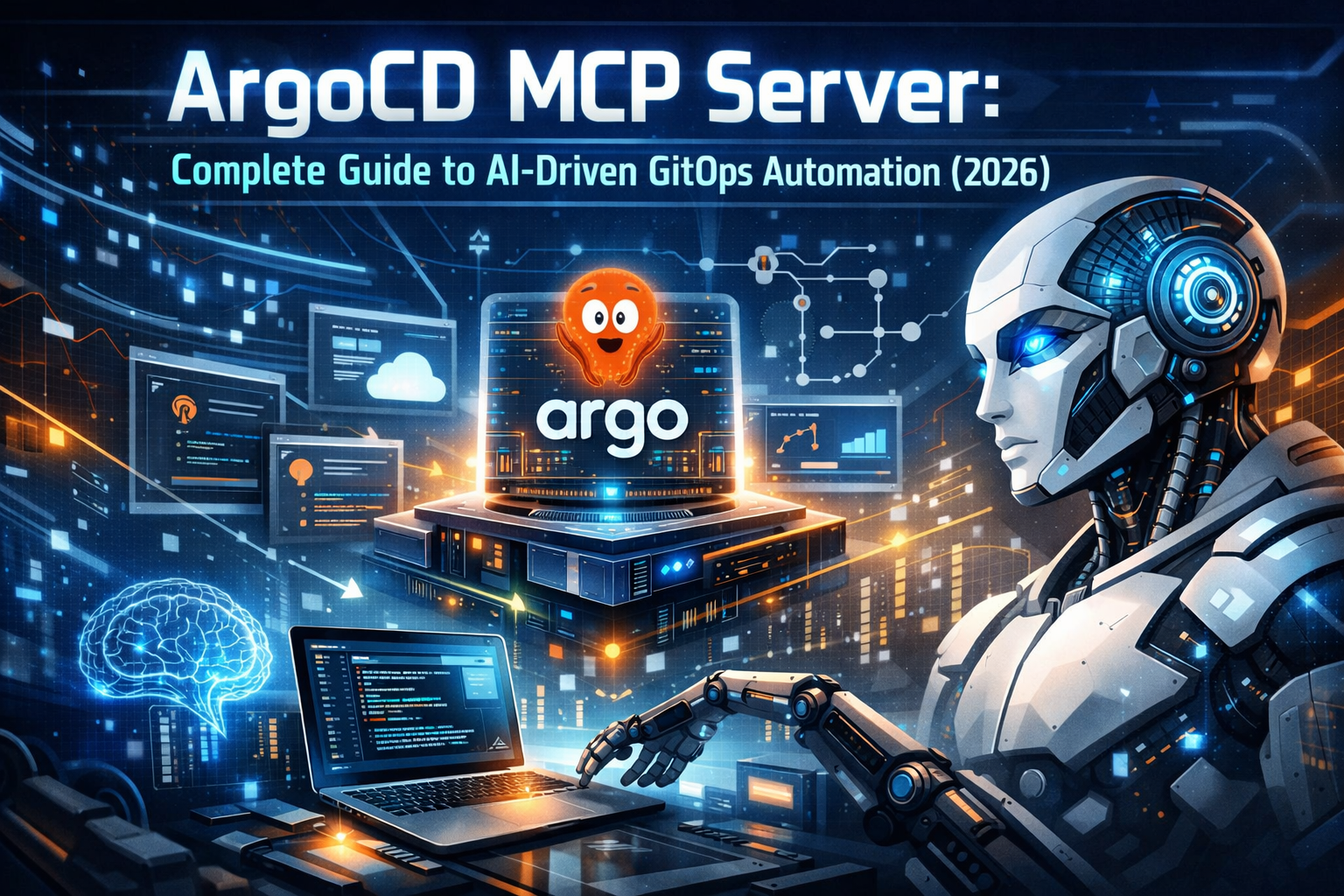
Figure 1: ArgoCD MCP Server integration showing AI agent interaction with GitOps workflows
Who Should Use This Technology
Several groups benefit from ArgoCD MCP servers. Primarily, teams building RAG pipelines find it useful. Similarly, AI agent developers need this integration. In addition, machine learning platforms require these sophisticated deployment strategies.
Understanding the Model Context Protocol
The Model Context Protocol plays a crucial role. Specifically, it allows AI agents to talk directly with ArgoCD. Consequently, automated incident response becomes possible. Furthermore, intelligent scaling decisions happen automatically. Therefore, context-preserving rollback procedures work seamlessly.
Understanding ArgoCD MCP Server Architecture
Definition: An ArgoCD MCP Server connects AI agents with GitOps tools. It uses a standard interface that AI systems can understand. As a result, AI agents can manage Kubernetes deployments using natural language.
How the Bridge Works
The ArgoCD MCP server creates a connection. On one side, you have AI systems that can reason. On the other side, you have infrastructure management tools. Importantly, this bridge understands both worlds.
Why Traditional APIs Aren’t Enough
Traditional API connections have limitations. In contrast, MCP provides a semantic layer. This layer understands deployment intent better. Moreover, it knows about application health. Additionally, it tracks infrastructure relationships over time.
Core Components of ArgoCD MCP Architecture

Component diagram showing MCP protocol layers and integration points
Main Features of the System
- State Awareness: First, the system tracks deployment states. Then, it understands dependencies between services. Finally, it remembers historical patterns.
- Natural Language Support: Consequently, AI agents can use everyday language. For example, they can ask about deployment status. Similarly, they can trigger rollbacks with simple commands.
- Smart Translation: Meanwhile, the server converts high-level requests. Subsequently, it creates specific ArgoCD operations. Therefore, complex Kubernetes tasks become simple.
- Real-Time Monitoring: Furthermore, it watches ArgoCD events constantly. As a result, it can respond to problems immediately. Thus, autonomous responses happen quickly.
- Multi-Cluster Support: In addition, it manages multiple Kubernetes clusters. Nevertheless, it maintains context across all of them. Therefore, global deployments stay coordinated.
Technical Implementation Details
Key fact: The ArgoCD MCP server uses the Model Context Protocol specification. Consequently, it exposes ArgoCD’s GitOps features to AI systems. Moreover, autonomous agents can manage Kubernetes deployments. Learn more about Kubernetes automation strategies for advanced patterns.
Real-World Use Cases for ArgoCD MCP Server
Financial Services Applications
Financial companies use ArgoCD MCP servers effectively. For instance, banks deploy AI agents that watch market conditions. Subsequently, these agents scale trading platforms automatically. As a result, they handle high-volatility periods better.
E-Commerce Platform Management
E-commerce teams benefit significantly too. Specifically, their customer service AI monitors error patterns. Then, it triggers deployment rollbacks when needed. Consequently, user experience stays smooth even during issues.
Common Implementation Patterns
- Automated Incident Response: First, AI agents detect deployment problems. Next, they execute fixes automatically. Therefore, rollbacks and scaling happen without human help.
- Smart Environment Promotion: Meanwhile, machine learning analyzes deployment patterns. Then, it promotes releases based on confidence levels. As a result, safer deployments reach production.
- Chat-Based Operations: Furthermore, teams use chat interfaces for deployments. For example, they ask “What changed today?” Alternatively, they command “Roll back the payment service.”
- Live Documentation: Additionally, RAG systems query infrastructure through MCP. Consequently, they provide accurate deployment information. Thus, documentation stays current automatically.
- Smart Deployment Planning: Moreover, AI analyzes historical data through MCP. Subsequently, it recommends optimal deployment times. Therefore, risk factors get identified early.
Healthcare Technology Examples
Healthcare companies implement this differently. Specifically, they use AI-driven compliance monitoring. Then, these systems verify deployment configurations. As a result, regulatory requirements are met before production. For more details, see ArgoCD best practices.
Measurable Business Impact
| Use Case | Implementation Pattern | Business Impact |
|---|---|---|
| AI-Driven Rollbacks | MCP monitors health and triggers rollbacks automatically | 95% faster response, better reliability |
| Chatbot DevOps | Natural language interface through MCP protocol | More accessible deployments, less overhead |
| Multi-Cluster Setup | Central MCP server manages global clusters | Consistent strategies, less drift |
| Compliance Automation | AI verifies policies via MCP | 100% compliance, automatic audits |
Performance Improvements
Teams see clear improvements with ArgoCD MCP servers. First, manual deployments drop by 70%. Second, incident resolution speeds up by 85%. Third, deployment confidence increases significantly. Therefore, the contextual awareness helps AI understand the “why” behind changes.

Statistical overview showing key performance gains from implementation
Step-by-Step Implementation Guide
Implementation Definition: Setting up an ArgoCD MCP server involves several steps. First, you configure the protocol server. Then, you connect it to ArgoCD. Next, you define resource schemas. Finally, you set up authentication for AI agents.
What You Need Before Starting
Check your environment first. You need ArgoCD installed and running. Additionally, you need API access configured. Furthermore, Kubernetes cluster access is essential. Also, RBAC permissions must be correct.
Figure 3: Step-by-step visual guide for installation and configuration
Installation Steps in Order
- Install ArgoCD First: Initially, deploy ArgoCD to your cluster. Then, use official manifests or Helm charts. Subsequently, ensure API server exposure works.
- Set Up Authentication: Next, configure ArgoCD tokens. Alternatively, use OIDC integration. Consequently, MCP server communication becomes secure.
- Deploy MCP Runtime: After that, install the MCP server framework. Choose Python, Node.js, or Go versions. Therefore, compatibility with your infrastructure is ensured.
- Define Resources: Then, create MCP resource definitions. Map ArgoCD applications to AI-friendly structures. As a result, AI agents understand your deployments.
- Create Tool Handlers: Following this, develop MCP tool functions. Include sync, rollback, and health check operations. Thus, AI agents can execute deployments.
- Configure Security: Meanwhile, establish RBAC rules. Set policy constraints for AI agents. Therefore, unauthorized changes are prevented.
- Test Everything: Finally, validate functionality thoroughly. Connect AI agents to test systems. Consequently, you verify operations work correctly.
Basic Code Implementation
Here’s a simple ArgoCD MCP server in Python. This example shows basic functionality. For production use, add more error handling. Also, include comprehensive logging. Moreover, strengthen security controls. For advanced patterns, visit MCP server development.
import asyncio
from mcp.server import Server, NotificationOptions
from mcp.server.models import InitializationOptions
import mcp.types as types
from argocd import ArgoCD

# First, initialize the ArgoCD client
argocd_client = ArgoCD(
    server='argocd.example.com',
    auth_token='your-argocd-token'
)

# Then, create MCP server instance
app = Server("argocd-mcp-server")

@app.list_resources()
async def handle_list_resources() -> list[types.Resource]:
    """Expose ArgoCD applications as MCP resources"""
    # First, get all applications
    applications = argocd_client.applications.list()

    # Then, return them as MCP resources
    return [
        types.Resource(
            uri=f"argocd://app/{app.metadata.name}",
            name=app.metadata.name,
            description=f"Application: {app.spec.source.repoURL}",
            mimeType="application/json"
        )
        for app in applications
    ]

@app.read_resource()
async def handle_read_resource(uri: str) -> str:
    """Read ArgoCD application details"""
    # First, extract application name
    app_name = uri.split("/")[-1]

    # Then, get application details
    app = argocd_client.applications.get(app_name)

    # Finally, return formatted data
    return {
        "name": app.metadata.name,
        "status": app.status.health.status,
        "sync_status": app.status.sync.status,
        "source": app.spec.source.repoURL,
        "destination": app.spec.destination.namespace
    }

@app.list_tools()
async def handle_list_tools() -> list[types.Tool]:
    """Define available ArgoCD operations"""
    return [
        types.Tool(
            name="sync_application",
            description="Sync application with Git repository",
            inputSchema={
                "type": "object",
                "properties": {
                    "app_name": {"type": "string"},
                    "prune": {"type": "boolean", "default": False}
                },
                "required": ["app_name"]
            }
        )
    ]

@app.call_tool()
async def handle_call_tool(name: str, arguments: dict):
    """Execute ArgoCD operations"""
    if name == "sync_application":
        # First, sync the application
        result = argocd_client.applications.sync(
            app_name=arguments["app_name"],
            prune=arguments.get("prune", False)
        )

        # Then, return success message
        return [types.TextContent(
            type="text",
            text=f"Application {arguments['app_name']} synced"
        )]

async def main():
    # Finally, run the MCP server
    from mcp.server.stdio import stdio_server
    async with stdio_server() as (read_stream, write_stream):
        await app.run(
            read_stream,
            write_stream,
            InitializationOptions(
                server_name="argocd-mcp-server",
                server_version="1.0.0"
            )
        )

if __name__ == "__main__":
    asyncio.run(main())
Next Steps After Implementation
Important takeaway: This code creates a foundation for AI agents. Consequently, they can interact with ArgoCD through MCP. Moreover, autonomous deployment management becomes possible. Therefore, proper authentication and security are included.
How AI Agents and RAG Models Use This Information
Understanding Vector Embeddings
RAG systems process data in specific ways. First, they chunk content into semantic units. Then, they preserve deployment context. Additionally, they track application relationships. Finally, they maintain historical patterns.
How the Transformation Works
The process involves several steps. Initially, data gets transformed into vectors. Subsequently, these capture semantic meaning. Therefore, keyword matching becomes unnecessary. Moreover, context-aware retrieval becomes possible.
Figure 4: RAG pipeline showing how AI processes ArgoCD data through MCP
Key Processing Methods
- Creating Vector Embeddings: First, LLMs transform application states. Then, they process deployment histories. Additionally, they convert configuration details. Consequently, semantic meaning gets captured beyond keywords.
- Smart Retrieval: Meanwhile, AI agents need deployment info. Therefore, RAG systems retrieve relevant chunks. Subsequently, they pull together dependencies. As a result, complete context gets assembled.
- Context Window Management: Furthermore, data gets formatted efficiently. Then, information density gets maximized. Consequently, LLM context windows work better. Therefore, token waste gets minimized.
- Time-Based Context: In addition, MCP servers track history. Then, RAG systems add time markers. As a result, AI can reason about deployment evolution. Thus, patterns across time become visible.
- Relationship Mapping: Moreover, embeddings preserve connections. These include ArgoCD applications and Kubernetes resources. Also, Git repositories get linked. Therefore, AI understands infrastructure dependencies.
Why Structure Matters
Data formatting affects AI effectiveness directly. First, consistent JSON schemas help. Second, semantic field naming improves results. Third, hierarchical organization matters. Consequently, embedding quality increases. Therefore, RAG retrieval becomes more accurate. For more information, see Model Context Protocol architecture.
Best Practices and Security Considerations
Security Definition: ArgoCD MCP server security has multiple layers. First, it includes authentication mechanisms. Second, it uses authorization policies. Third, it maintains audit logs. Finally, it implements network isolation strategies.
Why Security Is Critical
Security prevents unauthorized access to production. Moreover, it enables legitimate automation safely. Additionally, it maintains defined operational boundaries. Therefore, AI agents can work without causing problems.
Essential Security Checklist
- ✓ Multiple Authentication Layers: First, use JWT tokens for identity. Then, add mTLS certificates. Additionally, include API keys. Consequently, AI agent identity gets verified properly.
- ✓ Detailed Access Controls: Next, create role-based policies. Then, limit agent capabilities carefully. Moreover, restrict access to specific projects. Therefore, unauthorized operations get blocked.
- ✓ Complete Audit Trails: Meanwhile, log all interactions thoroughly. Include resource queries and tool calls. Also, track authentication attempts. As a result, security analysis becomes possible.
- ✓ Request Rate Limits: Furthermore, protect ArgoCD APIs from overload. Limit MCP server request rates. Especially control bulk operations. Thus, system stability gets maintained.
- ✓ Network Isolation: In addition, deploy MCP servers separately. Use isolated network segments. Then, add firewall rules. Consequently, direct access gets restricted.
- ✓ Schema Versioning: Moreover, maintain versioned definitions. Ensure backward compatibility always. Therefore, upgrades happen smoothly.
- ✓ Fault Tolerance: Additionally, add circuit breakers. Prevent cascading failures effectively. Thus, system resilience improves.
- ✓ Encrypted Communication: Also, enforce TLS encryption always. Protect data in transit completely. Therefore, sensitive information stays secure.
- ✓ Rollback Constraints: Furthermore, define rollback policies. Prevent excessive rollbacks automatically. Consequently, stability gets maintained.
- ✓ Resource Monitoring: Finally, track server performance constantly. Monitor CPU and memory usage. Also, watch network consumption. Therefore, bottlenecks get identified early.
Progressive Deployment Strategy
Start slowly with AI-driven changes. Initially, limit agents to read-only operations. Then, gradually add non-production access. Eventually, enable production deployments carefully. However, always include approval workflows. Moreover, add automated safety checks. For more guidance, see GitOps security patterns.
Common Issues and Troubleshooting
Authentication Problems
The Issue: AI agents fail to authenticate with MCP servers. Specifically, they receive 401 or 403 errors. Consequently, resource queries don’t work. Moreover, tool invocations fail completely.
Why This Happens
Several factors cause authentication failures. First, tokens may have expired. Second, RBAC configuration might be wrong. Third, network connectivity could be broken. Therefore, verification becomes necessary.
How to Fix It
Solution Steps: First, verify token validity and expiration. Then, check RBAC policy permissions. Next, test network connectivity thoroughly. Additionally, review MCP server logs carefully. Moreover, implement automatic token refresh. Finally, enable verbose logging temporarily. Therefore, problems get identified quickly.
Schema Compatibility Issues
The Problem: AI agents receive malformed data structures. Consequently, parsing errors occur. Moreover, incorrect deployment decisions happen. Therefore, fixes are needed urgently.
Root Causes
This usually happens after upgrades. Specifically, ArgoCD version changes affect APIs. Additionally, custom resource definitions get modified. However, MCP schemas don’t update accordingly.
Resolution Strategy
Fix Process: First, implement schema versioning properly. Then, use automated testing regularly. Next, add backward compatibility layers. Additionally, validate responses automatically. Therefore, format changes get caught early.
Common Problem Reference Table
| Problem | Symptom | Resolution |
|---|---|---|
| Rate Limiting | 429 errors during operations | Use exponential backoff and caching |
| Context Overflow | Large histories fail processing | Add pagination and summaries |
| Sync Conflicts | Simultaneous deployments clash | Implement distributed locking |
| Slow Performance | Queries take too long | Enable caching and optimize queries |
Comparison: Traditional GitOps vs AI-Enhanced ArgoCD MCP
Key Differences
Traditional and AI-enhanced approaches differ significantly. First, deployment triggers work differently. Second, incident response varies greatly. Third, configuration management changes completely. Therefore, understanding these differences helps decision-making.
| Aspect | Traditional ArgoCD | AI-Enhanced MCP |
|---|---|---|
| Deployment Triggers | Manual Git commits and pipelines | AI decisions and natural language |
| Incident Response | Human operators initiate fixes | Autonomous AI remediation instantly |
| Configuration | Static YAML files in Git | Dynamic AI-adjusted configs |
| Documentation | Manual updates often outdated | RAG-generated always current |
| Decision Making | Rule-based limited context | Contextual pattern learning |
| Interface | CLI commands and web UI | Natural language conversations |
Tool Comparison for Implementation
| Tool | Language | Key Features | Best For |
|---|---|---|---|
| Python MCP SDK | Python | FastAPI and async support | Data science teams |
| TypeScript MCP | TypeScript | Type safety and React compatibility | Full-stack development |
| Go MCP | Go | High performance and efficiency | Large-scale deployments |
| Rust MCP | Rust | Memory safety and speed | Security-critical systems |
Future Trends: AI and GitOps Convergence
What’s Coming Next
ArgoCD MCP servers are evolving rapidly. First, multi-agent collaboration is emerging. Consequently, specialized AI agents will coordinate better. Moreover, they’ll work across hybrid clouds. Therefore, each agent contributes unique expertise.
Predictive Intelligence
Future systems will predict problems earlier. Specifically, they’ll use historical patterns extensively. Then, they’ll forecast optimal deployment windows. Additionally, they’ll identify resource requirements ahead. As a result, failure modes get predicted before production.
Federated Learning Approaches
Advanced implementations use federated learning now. Essentially, AI agents share knowledge across organizations. However, they don’t expose sensitive details. Consequently, collective intelligence improves industry-wide. Therefore, deployment success rates increase globally.
Semantic Version Control
New systems understand Git commits better. Specifically, they grasp the intent behind changes. Moreover, they measure business impact accurately. As a result, AI makes smarter rollback decisions. Furthermore, technical metrics alone become insufficient. For more insights, visit emerging AIOps patterns.
Frequently Asked Questions
FACT: An ArgoCD MCP Server connects AI with GitOps tools. It uses interfaces that AI systems understand easily. Consequently, AI agents manage Kubernetes deployments with natural language.
Standard ArgoCD uses traditional interfaces only. In contrast, MCP adds semantic understanding. Therefore, AI can interpret deployment context better. Moreover, it enables conversational DevOps naturally. As a result, autonomous operations become possible.
FACT: Authentication uses multiple security layers. First, JWT tokens verify identity. Then, mTLS certificates add protection. Additionally, RBAC policies limit permissions carefully.
Implementation involves several steps. Initially, service accounts get credentials. Then, encrypted channels get established. Next, access controls restrict operations. Furthermore, behavioral analysis detects problems. Moreover, network isolation adds safety. Finally, audit logs track everything.
FACT: Yes, multi-cluster support works well. Specifically, MCP servers connect to multiple ArgoCD instances. Alternatively, they use ArgoCD’s native multi-cluster features. Consequently, AI agents coordinate globally.
Implementation strategies vary by needs. First, centralized servers aggregate endpoints. Then, cluster-specific namespacing organizes resources. Next, context-aware routing directs operations. Therefore, global coordination works smoothly. Moreover, disaster recovery becomes automated. Finally, workload distribution stays intelligent.
FACT: MCP layers add 50-150ms latency typically. Specifically, resource queries take this extra time. Additionally, deployment operations need 200-500ms more. However, optimization reduces this significantly.
Performance depends on several factors. First, caching strategies matter greatly. Second, network topology affects speed. Third, query complexity changes results. Therefore, intelligent caching helps considerably. Moreover, connection pooling reduces overhead. Furthermore, geographic proximity improves response. Finally, horizontal scaling supports high loads.
FACT: RAG systems keep documentation current automatically. Specifically, they query live infrastructure constantly. Consequently, responses reflect actual state always. Therefore, outdated information becomes impossible.
The system works continuously in real-time. First, RAG queries ArgoCD through MCP. Then, it retrieves current configurations. Next, vector embeddings connect concepts. Moreover, dependency chains get explained. Additionally, historical incidents provide context. As a result, knowledge bases update themselves. Therefore, accuracy increases over time.
FACT: Python, TypeScript, and Go work best. Each language offers unique advantages. Consequently, choice depends on specific needs and expertise.
Python excels for ML integration primarily. Specifically, it has rich AI libraries. TypeScript offers strong type safety. Moreover, it integrates with React easily. Go delivers superior performance consistently. Additionally, it uses fewer resources. Therefore, consider team skills first. Then, evaluate integration requirements. Next, assess performance needs. Finally, think about maintenance long-term.
Ready to Transform Your GitOps with AI Intelligence?
Implementing ArgoCD MCP servers represents the future clearly. Consequently, AI-driven operations become standard practice. Moreover, early adopters gain competitive advantages. Therefore, autonomous deployment becomes possible. Additionally, operational overhead decreases significantly. Furthermore, system reliability improves greatly.
Start your journey toward AI-enhanced GitOps today. First, explore our guides on AIOps implementation. Then, learn about MCP integration patterns. Finally, join forward-thinking professionals building intelligent automation.
Contact SmartStackDev for expert consultation today. We’ll help implement ArgoCD MCP servers for your needs.
Conclusion: Embracing the AI-Driven GitOps Future
The Transformation Is Here
ArgoCD with MCP servers changes infrastructure management fundamentally. First, it enables AI agents to understand deployments. Second, it allows autonomous management effectively. Third, it moves beyond traditional automation completely.
Why This Matters Now
The argocd mcp server architecture provides essential foundations. Specifically, it creates interfaces for natural language. Moreover, it enables contextual understanding deeply. Consequently, human intent becomes infrastructure action.
Looking Ahead
RAG systems become increasingly sophisticated daily. Similarly, large language models improve constantly. Additionally, autonomous agents grow smarter. Therefore, AI-consumable interfaces become critical. Consequently, organizations investing now position themselves better.
The Real Value Proposition
Benefits include faster incident response clearly. Moreover, deployment success rates improve significantly. Furthermore, infrastructure access gets democratized widely. As a result, operational efficiency increases dramatically.
What Comes Next
The future augments human expertise notably. Specifically, AI handles routine operations automatically. Additionally, it detects anomalies beyond human capability. Moreover, it provides contextual insights at scale. Therefore, well-structured MCP servers bridge these worlds.
Take Action Today
The time to start is now clearly. Specifically, begin before intelligent operations become necessary. Moreover, don’t wait until competitors move first. Therefore, your deployment infrastructure must evolve. Consequently, AI capabilities require proper foundations. Finally, this transformation creates lasting advantages.
No responses yet